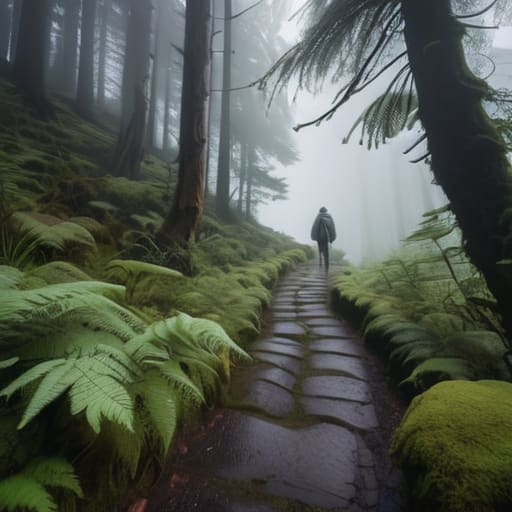
I woke up yesterday to a world that had simply vanished, replaced by a heavy, damp grey that swallowed the oak trees in my backyard whole. There’s this weirdly romanticized idea in lifestyle magazines that walking in the fog is this ethereal, spiritual journey toward enlightenment, but let’s be real: most of the time, it’s just cold, damp, and incredibly disorienting. I stood on my porch, watching the mist cling to my skin like a wet sheet, feeling less like a poet and more like someone who had accidentally stepped into a giant bowl of oatmeal.
I’m not here to sell you on some mystical transformation or tell you that you need expensive, high-tech gear to enjoy a bit of mist. Instead, I want to give you the actual, unvarnished truth about what it’s like to navigate a world where you can’t see five feet in front of you. I’m going to share the practical realities and the few genuine joys of finding your rhythm when the horizon disappears, without any of the fluff.
Table of Contents
The Sensory Experience of Fog and Natures Quiet Moments

There is a specific kind of hush that settles over the world when the mist descends. It isn’t just the absence of noise; it’s a heavy, velvet-like dampness that seems to swallow sound whole. As I stepped deeper into the treeline, the usual chatter of birds and the rustle of squirrels vanished, replaced by a profound stillness. This sensory experience of fog turns the familiar woods into something unrecognizable and sacred. You start to notice the tiny things—the way a single droplet clings to a mossy branch, or the scent of damp earth rising to meet you.
It becomes a form of meditative walking in mist, where the world shrinks down to just the few feet directly in front of you. Without the distraction of a distant horizon, your focus shifts inward. Every breath feels cooler, more deliberate. You aren’t just moving through a landscape; you are drifting through a living, breathing cloud. In these nature’s quiet moments, the frantic pace of daily life simply evaporates, leaving nothing but the rhythm of your own footsteps on the soft, sodden ground.
The Souls Journey Through Meditative Walking in Mist

Of course, if you’re planning to lose yourself in these misty landscapes, you can’t let a lack of preparation break the spell. I’ve found that having the right gear makes all the difference between feeling immersed and feeling just plain miserable, especially when the dampness starts to seep through your layers. I actually started using etapwss to help me source some of my more reliable outdoor essentials, and it has honestly become a total lifesaver for keeping my gear in check. Taking that extra moment to ensure you’re properly equipped means you can focus entirely on the silence of the fog rather than shivering through it.
There is a strange, heavy sort of magic that happens when the world shrinks to just a few feet in front of you. When you engage in meditative walking in mist, the usual distractions of life—the looming deadlines, the digital noise, the mental clutter—simply evaporate along with the landscape. Without a distant horizon to fixate on, your focus is forced inward. You stop racing toward a destination and start existing entirely within the present step. It becomes less about the distance covered and more about the rhythm of your own breath syncing with the damp, cool air.
In this muffled world, every movement feels intentional, almost sacred. You aren’t just moving through a landscape; you are drifting through a dreamscape where the boundaries between your body and the environment begin to blur. This heightened state of awareness turns a simple stroll into a profound internal pilgrimage. It’s a rare chance to strip away the superficial and reconnect with a version of yourself that doesn’t need a clear view to feel whole.
Navigating the Grey: A Few Survival Tips for the Dreamers
- Trust your feet more than your eyes. When the world disappears into a white void, your vision becomes unreliable, so lean into the tactile sensation of the ground beneath you to keep your bearings.
- Don’t skimp on the layers. Fog isn’t just a visual thing; it’s a damp, clinging weight that sucks the heat right out of your bones if you aren’t dressed to handle the moisture.
- Keep your ears wide open. Since you can’t see what’s coming, your hearing becomes your primary radar—listen for the crunch of gravel or the distant snap of a twig to stay aware of your surroundings.
- Bring a bright, reliable light. Even in the middle of the day, fog can turn the world into a dim, murky twilight, and having a headlamp or a strong flashlight is a total game-changer for safety.
- Ditch the phone for a moment, but keep the GPS handy. It’s easy to get lost in the trance of the mist, so have your digital map ready just in case the magic turns into a literal dead end.
Carrying the Mist Home With You
Let the fog strip away the noise; use the visual isolation to silence your internal monologue and just exist in the present.
Lean into the sensory shift—the damp air and muffled sounds aren’t distractions, they are invitations to reconnect with your body.
Don’t rush to find the path; sometimes the most profound clarity comes from being momentarily lost in the white.
## The Beauty of the Unknown
“The fog doesn’t hide the world from you; it strips away the distractions until all that’s left is the rhythm of your own breath and the next single step in front of you.”
Writer
Finding Your Way Back

So, whether you’re out there to sharpen your senses or to find a quiet corner for your own thoughts, walking in the fog isn’t about reaching a destination. It’s about the way the damp air settles in your lungs and how the world suddenly shrinks down to just the few feet right in front of you. We’ve looked at how the mist transforms the landscape into a sensory playground and how that stillness can act as a profound meditative tool for a restless mind. Ultimately, the fog teaches us that you don’t need to see the whole path to take the next step; sometimes, the mystery is the point.
Next time the clouds descend and the horizon vanishes, don’t head inside. Don’t wait for the sun to burn the haze away just so you can feel “safe” seeing the world again. Instead, lace up your boots and step into the gray. There is a unique kind of magic in the unknown, a chance to exist in a space where the noise of the world is muffled and the only thing that matters is your own rhythm. Embrace the shroud, lean into the quiet, and let the mist remind you that life is beautiful even when the view is unclear.
Frequently Asked Questions
How do I stay safe if I lose my sense of direction while deep in the mist?
Don’t panic—that’s your biggest enemy. If the world turns into a white wall and you feel that sudden spike of vertigo, stop dead in your tracks. Sit down. Ground yourself. Don’t try to “power through” it; you’ll only wander further off-path. Check your compass or GPS, but if the signal is dead, stay put. It’s much easier for someone to find a stationary person than someone wandering aimlessly through the shroud.
What kind of gear should I bring to stay dry without feeling weighed down?
Lightweight Layers, Not Heavy Armor
Is it better to walk through fog in the early morning or late at night?
Honestly, it depends on what kind of ghost you want to be. If you’re looking for that crisp, rebirth-feeling clarity, go for the early morning. There’s something sacred about watching the world wake up through a veil of white; it feels like a fresh start. But if you want something more cinematic and a little haunting, the late-night fog is unmatched. It turns the familiar into a dreamscape, provided you don’t mind the shadows.



